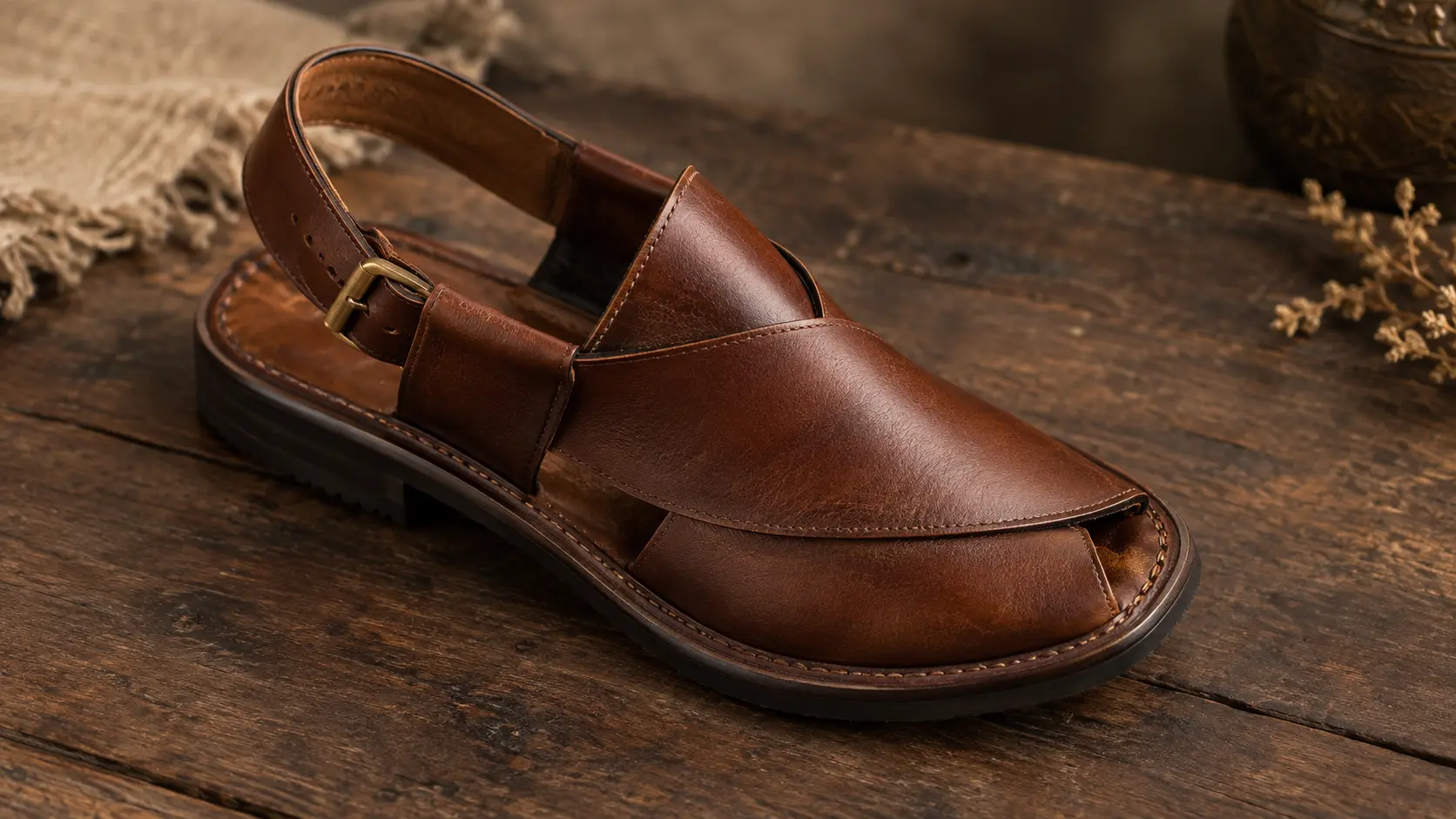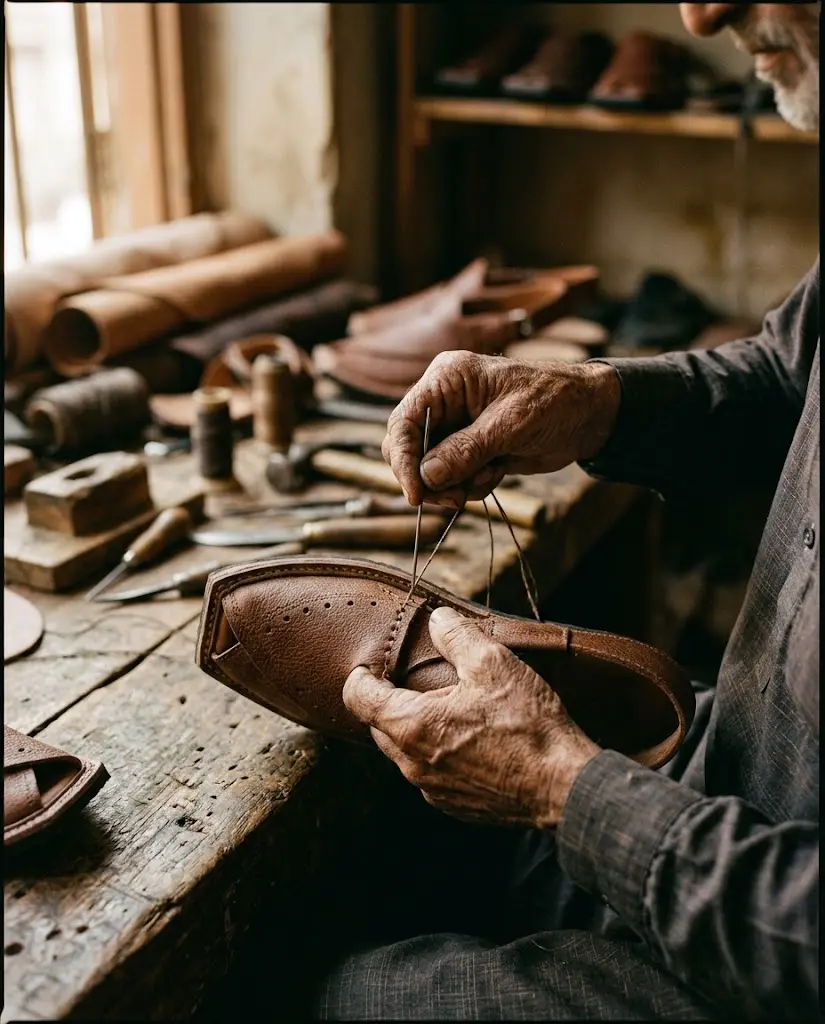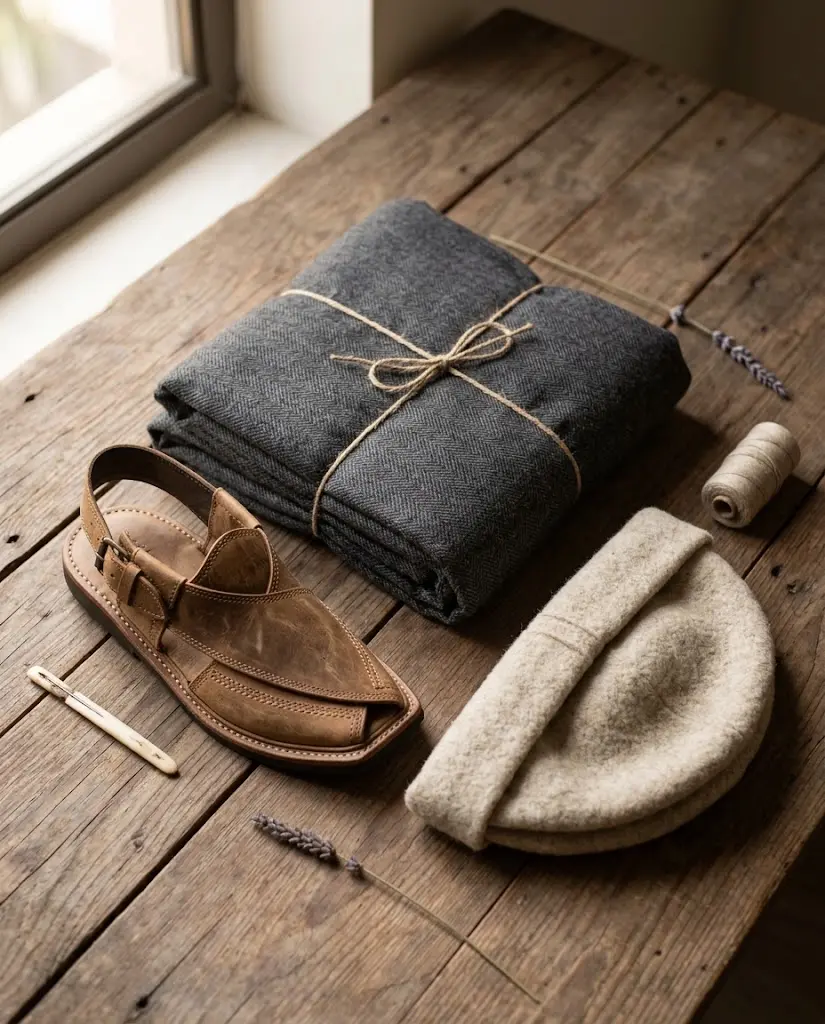
Genuine leather is forgiving in a way synthetic materials aren't — it stretches slightly, softens with wear, and takes the shape of your foot over time. But that same quality means it also reacts to neglect. Dust dulls it, water spots it if left to dry on its own, and dry heat can turn a supple strap brittle within a season. None of that takes much effort to prevent — it just needs a routine, not a one-time fix.
The good news is that caring for leather chappals is far simpler than caring for leather shoes — there's no lining, no glue seams hidden inside, and far less surface area to treat. A few minutes every few weeks is genuinely enough.
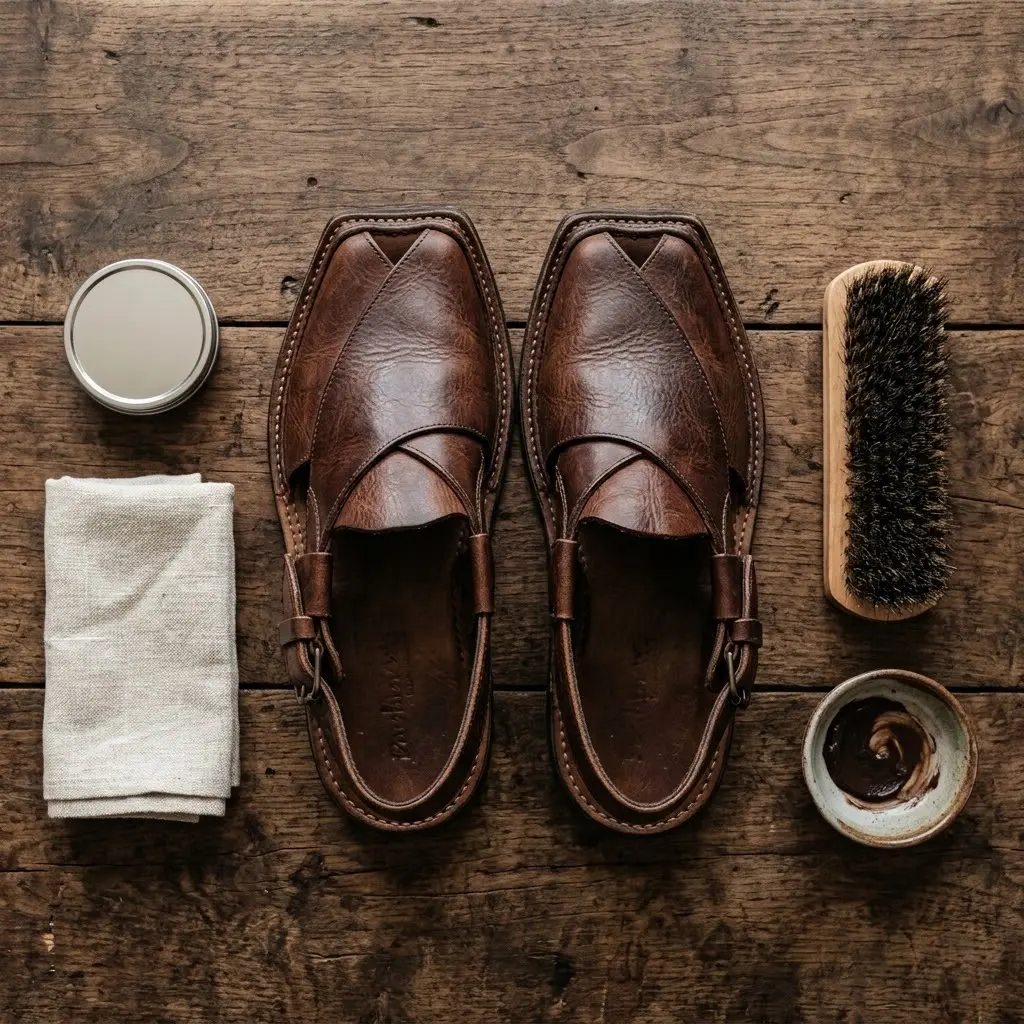
What You'll Need
- A soft, dry cloth for daily dusting and buffing.
- A soft-bristle brush to lift dirt out of stitching and seams.
- A mild, leather-safe soap — nothing with bleach, alcohol, or strong detergent.
- A leather conditioner or cream to replace the oils that wear and weather strip away.
Cleaning: Little and Often
Before anything else, wipe the chappals down with a dry cloth after every wear to lift off surface dust — this alone prevents most of the build-up that eventually needs deeper cleaning. Once every couple of weeks, or sooner if you've walked through dust or mud, follow up with a damp (not wet) cloth and a small amount of mild soap on any visible marks.
Work in small circular motions rather than scrubbing back and forth, and avoid soaking the leather — water that sits too long on the surface can leave a stain that's harder to lift than the original mark. Once you're done, wipe away any soap residue with a clean, barely damp cloth and let the leather dry naturally before wearing them again.
Conditioning: Replacing What Wear Takes Away
Every time leather flexes, dries out in the sun, or gets wet, it loses a small amount of the natural oils that keep it soft. Conditioning puts those oils back. As a general rule, condition genuine leather chappals once every four to six weeks with regular use — more often if you're wearing them daily, or if you live somewhere hot and dry.
- Test the conditioner on a small, hidden patch first — some formulas darken leather slightly.
- Apply a small amount with a soft cloth in circular motions, working it in evenly.
- Let it sit for 10–15 minutes so the leather can absorb it.
- Buff off any excess with a clean, dry cloth until the surface feels smooth, not greasy.
You'll notice the strap regains some of its original flexibility almost immediately after conditioning — that's the leather rehydrating, not just a surface shine.
Leather doesn't ask for much. It asks for consistency — a little attention on a regular schedule, rather than a lot of effort once something's already gone wrong.
Drying and Storage Between Wears
If your chappals get wet — from rain, a puddle, or just a damp floor — resist the urge to speed up drying with direct heat. A heater, hair dryer, or direct sunlight will dry the surface fast but pulls moisture out unevenly, which is exactly what causes cracking. Instead, stuff the chappal loosely with paper to help it hold its shape and absorb moisture from the inside, and let it air dry at room temperature, away from direct sun or a heat vent.
For everyday storage, keep chappals somewhere dry and ventilated rather than sealed in a plastic bag or box — leather needs to breathe, and trapped humidity is one of the most common causes of mould spots on stored footwear.
A Note for Monsoon Season
If you're wearing leather chappals through Pakistan's monsoon months, a couple of small adjustments help a lot. Wipe them down as soon as you're back indoors rather than waiting for the leather to dry with dirt or grit already on the surface, and hold off on conditioning until the leather is completely dry — conditioning damp leather traps moisture underneath rather than nourishing the surface.
Mistakes That Shorten a Chappal's Life
- Drying in direct sun or near a heater — this is the single biggest cause of premature cracking.
- Using harsh detergents or alcohol-based cleaners — these strip the natural oils that keep leather flexible.
- Ignoring small scuffs — a scuff left untreated tends to dry out and deepen into a crack over time.
- Storing them damp — even a small amount of trapped moisture can lead to mould spots within days in humid weather.
The Short Version
A genuine leather Peshawari chappal rewards a small, consistent routine: dust after every wear, clean gently every couple of weeks, condition every four to six weeks, and always let it dry naturally, away from direct heat. None of it takes more than a few minutes, and it's the difference between a pair that lasts a season and one that lasts for years. If you're still deciding what to buy in the first place, our guide on choosing the right Peshawari chappal covers what to look for in leather, sole, and fit before you commit.