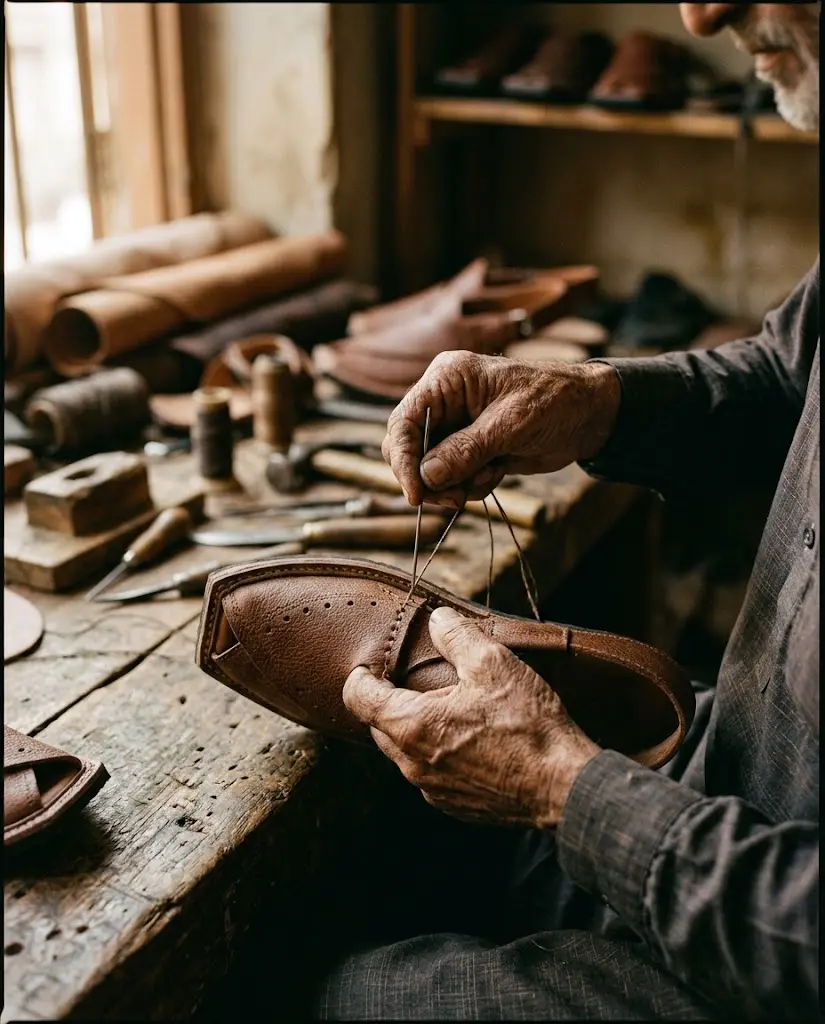
Walk through the old leather bazaars of Peshawar today and you'll still find workshops barely wide enough for two people, where a single craftsman cuts, shapes, and stitches a chappal from start to finish using tools that haven't changed much in generations. The Peshawari chappal wasn't designed in a studio or drawn up as a fashion concept — it was built by hand, by people solving a practical problem, in a place that gave the design its name.
Understanding where it comes from changes how you see it. It's not just a shoe — it's a design that survived because it worked, refined slowly by people who wore it and made it, long before it ever became a wardrobe staple across the rest of Pakistan.
Born in the Bazaars of Peshawar
The chappal takes its name directly from the city where it was shaped — Peshawar, a centuries-old trading hub at the edge of the Khyber Pass. Leatherwork has deep roots here, tied to the city's history as a crossroads for trade routes moving between Central Asia and South Asia. Raw hides, tanning knowledge, and skilled hands were all in one place, and out of that came a distinct style of open sandal built for the region's hot, dry summers and rugged terrain.
The old bazaars — narrow lanes lined with small leather stalls — were where the design took shape through repetition rather than invention. Each craftsman worked within the same basic form but developed his own eye for proportion, curve, and finish, the kind of small variation you only get from something made by hand, over and over, for years.
One Piece of Leather, No Wasted Material
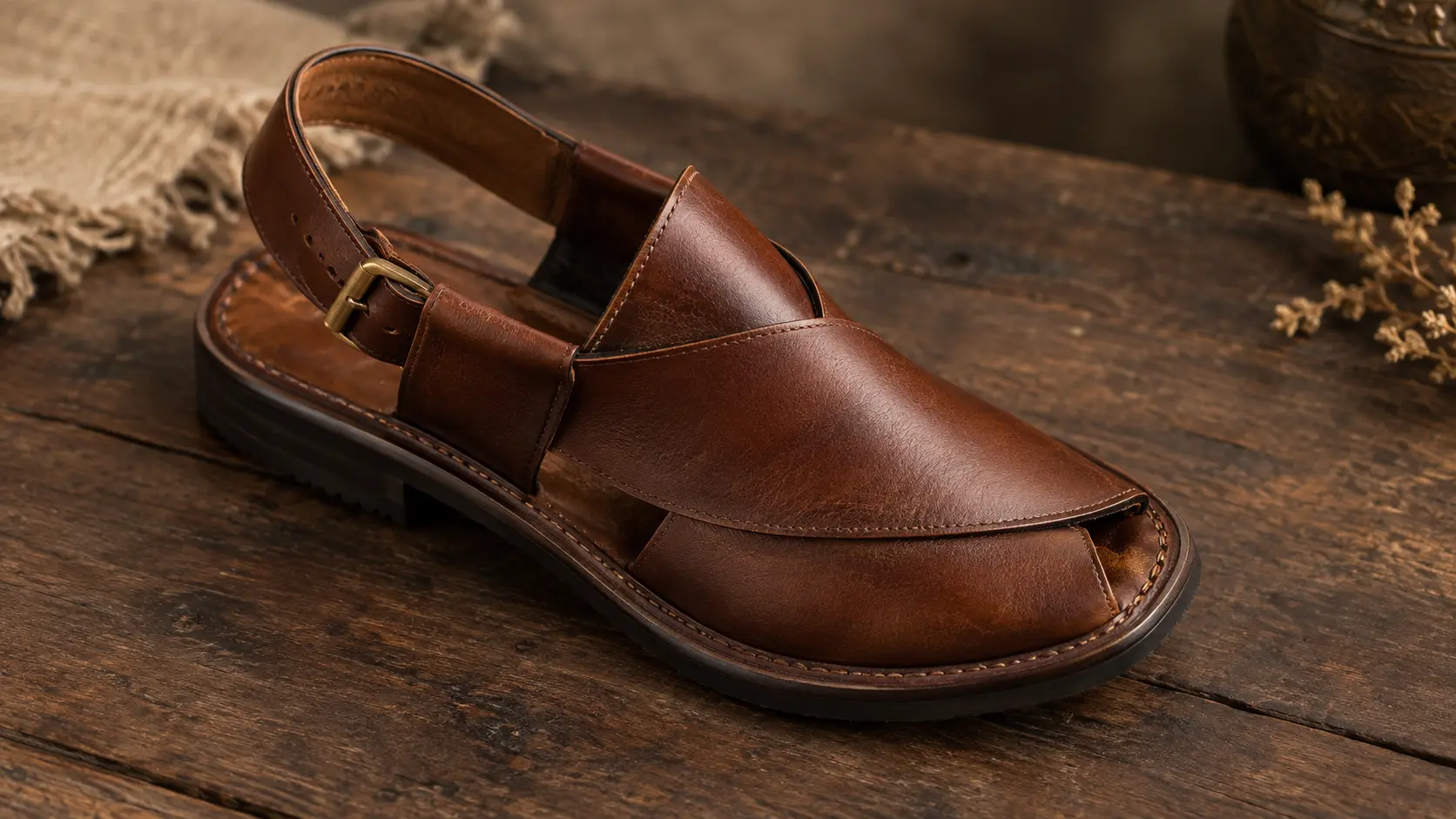
What makes the traditional Peshawari chappal distinctive isn't decoration — it's restraint. The classic design uses a single piece of thick leather for the upper strap, connected directly to a flat sole, with no lining, no padding, and historically, no glue. Everything was cut, folded, and stitched by hand from one hide, a practical response to a time and place where materials were valuable and nothing was wasted.
That same simplicity is what makes the design so easy to recognise even now. There's a wide toe strap, an open back, and a low, flat profile that leaves the foot free to move and breathe — a shape built for walking long distances in heat, not for standing in an air-conditioned room.
The design wasn't invented to be fashionable. It became fashionable because it was honest — built for a place, a climate, and a way of life.
A Craft Passed Hand to Hand
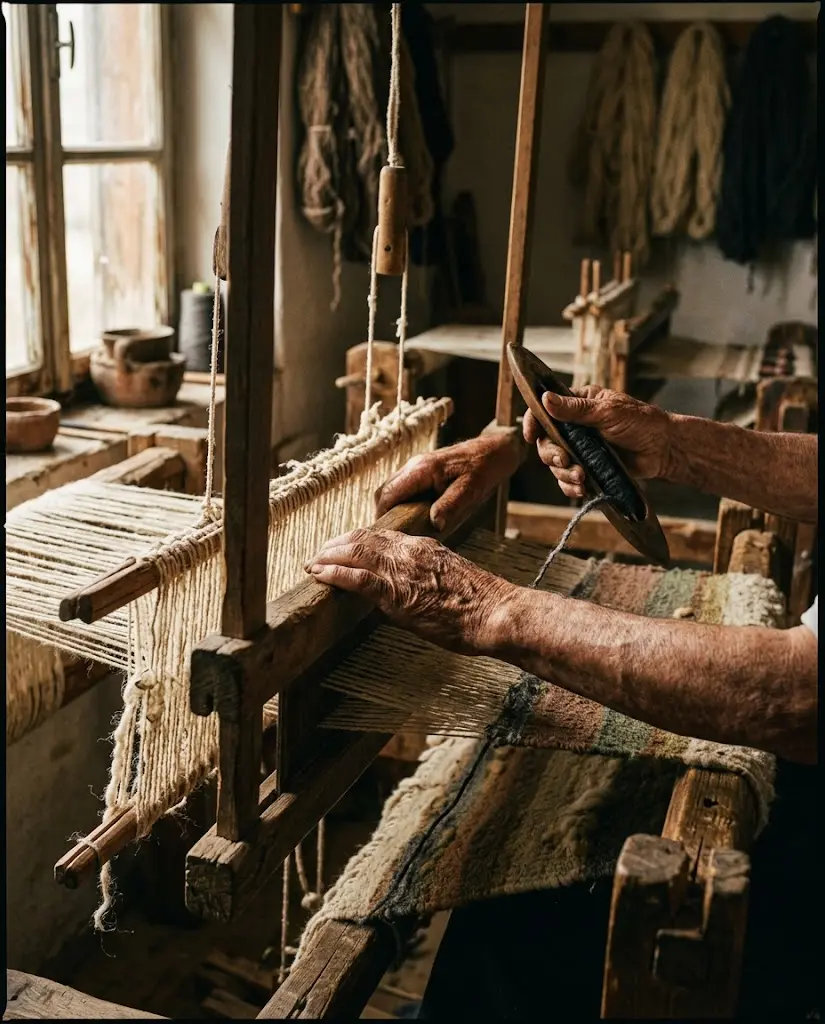
For most of its history, chappal-making wasn't taught in a classroom — it was passed from father to son, or from master craftsman to apprentice, inside the same small workshops generation after generation. An apprentice would spend years first learning to cut leather cleanly, then to shape a sole, and only much later to stitch a strap that would hold its shape under daily wear.
That slow, hands-on training is part of why the craft has been so hard to fully mechanise. Machines can cut leather to a template, but judging how a particular hide will stretch, or how tightly a stitch needs to sit to survive years of walking, still comes down to a craftsman's hands and experience — the same skill that's been quietly refined in Peshawar's workshops for longer than most of us can trace.
From Regional Wear to National Wardrobe
For a long time, the Peshawari chappal stayed largely regional — practical footwear worn around Peshawar and the surrounding areas, more functional than fashionable. That began to change as trade and travel carried it beyond the region, and as it found its way into the everyday wardrobe of people across Pakistan, worn with everything from traditional shalwar kameez to more modern casualwear.
Its spread wasn't driven by marketing — it travelled the way most enduring designs do, through people simply wearing something that worked and others noticing. By the time it reached wider popularity, the name itself had become shorthand for a whole style of open leather sandal, even when made outside Peshawar.
A Few Threads of History
- Origin: shaped in Peshawar's old leather bazaars, at a historic crossroads of regional trade.
- Traditional build: one piece of leather, hand-cut and hand-stitched, historically without glue.
- Purpose-built design: flat sole and open strap suited to hot summers and long distances on foot.
- Craft transmission: passed down through apprenticeship inside family workshops, not formal training.
What Hasn't Changed
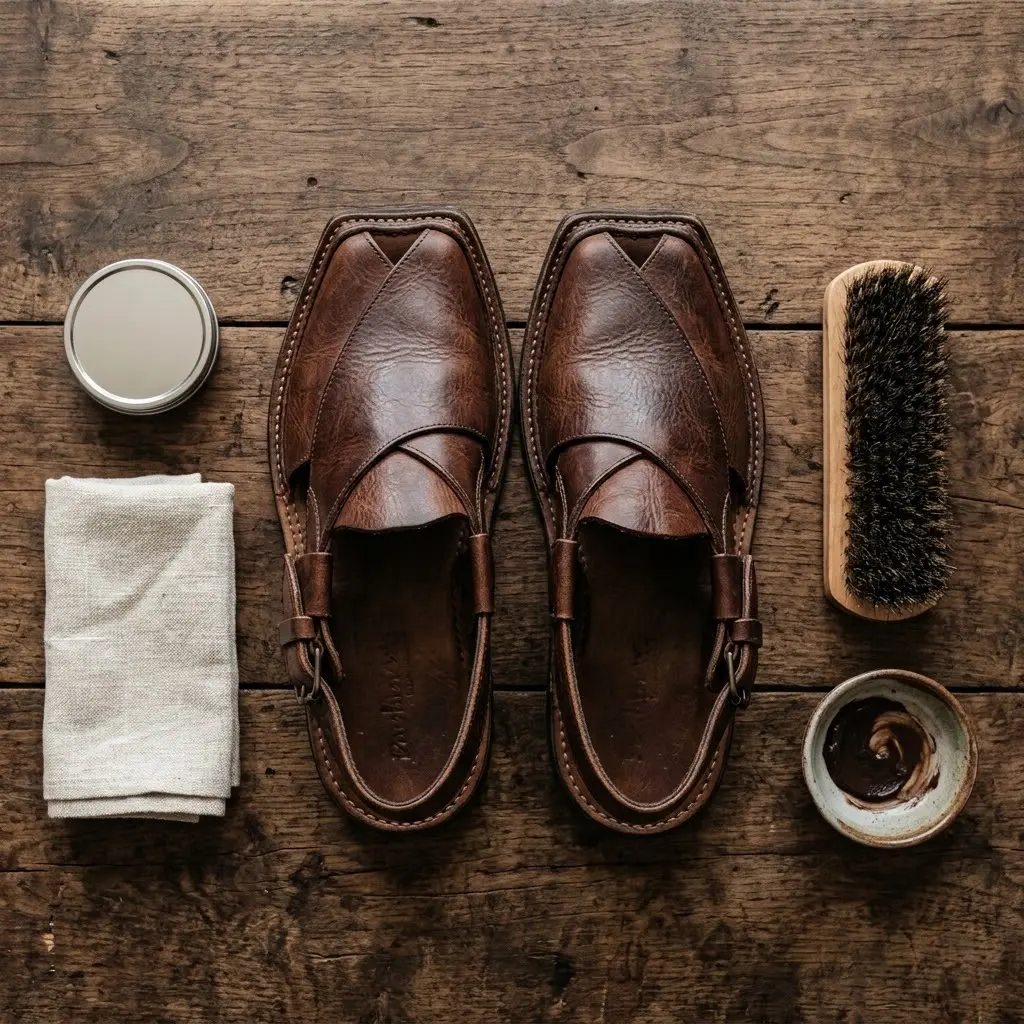
Modern versions of the chappal have adapted in small ways — some now use rubber soles for better grip and durability, and finishing has generally improved with better tools. But the core of the design has stayed remarkably consistent: a single leather upper, a wide toe strap, an open heel, and a flat, minimal sole. Craftsmen today still test flexibility by bending the sole in their hands, the exact same check used generations ago, because it's still the most reliable way to judge whether a chappal will hold up to daily wear.
That continuity is part of what makes a genuine, well-made Peshawari chappal feel different from a mass-produced imitation. It isn't just the materials — it's a design that's been tested and quietly perfected by the people who've been making it the same essential way for longer than most brands have existed.
Where the Craft Stands Today
Small workshops in Peshawar and beyond still make chappals largely by hand, even as demand has grown well past what any one workshop could produce a generation ago. At The MF Collection, that's exactly the tension we try to hold — meeting that demand without cutting the corners that made the design worth preserving in the first place: real leather, hand-finished stitching, and a sole that's tested the old-fashioned way, by bending it and feeling how it moves.
The craftsmen behind it may have changed over generations, but the standard they're working to hasn't — a chappal that's built to be worn every day, for years, not just to look right in a photo.
The Short Version
The Peshawari chappal wasn't designed — it was worked out, over generations, by craftsmen solving a practical problem with the materials and climate they had. That history is still visible in every genuine pair: the single-piece leather upper, the flat sole, the open, breathable strap. If you're choosing your first pair and want to know what separates a well-made chappal from an ordinary one, our guide to choosing the right Peshawari chappal walks through exactly what to look for.