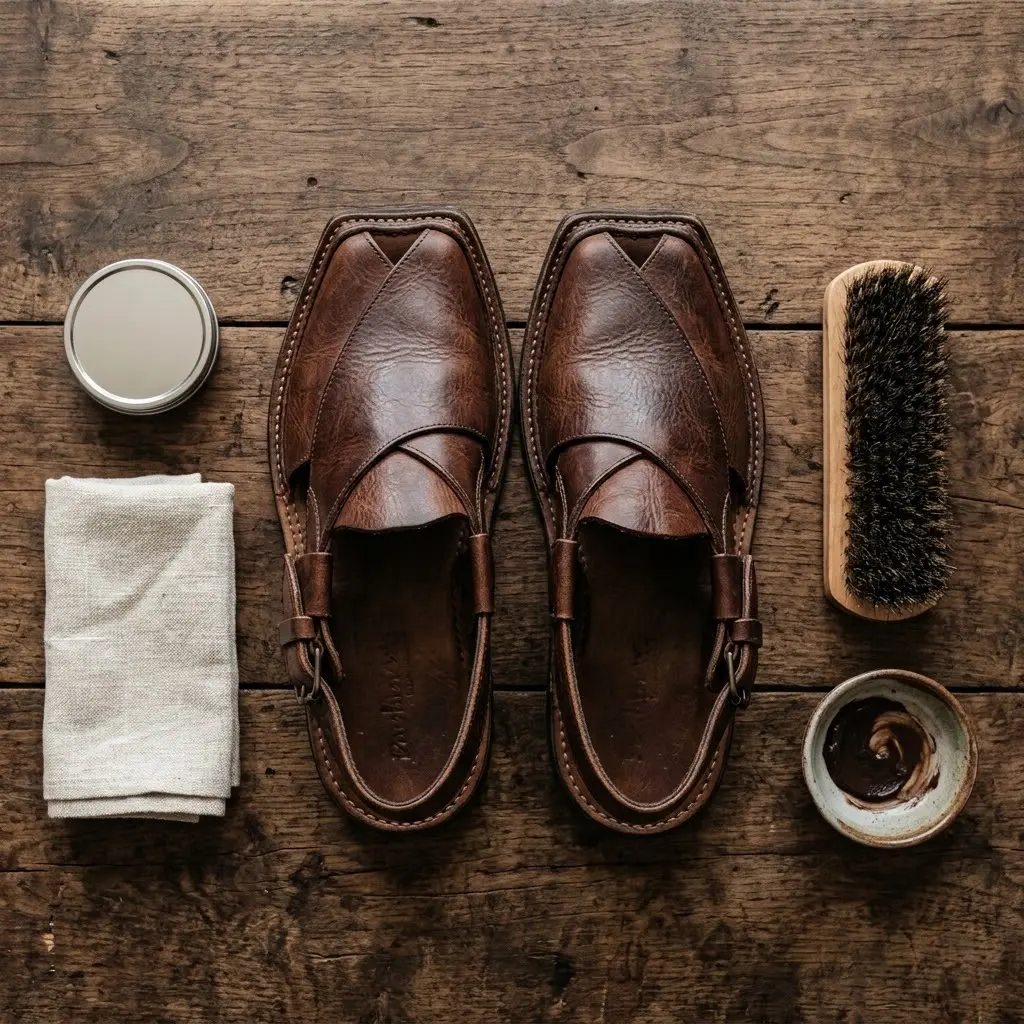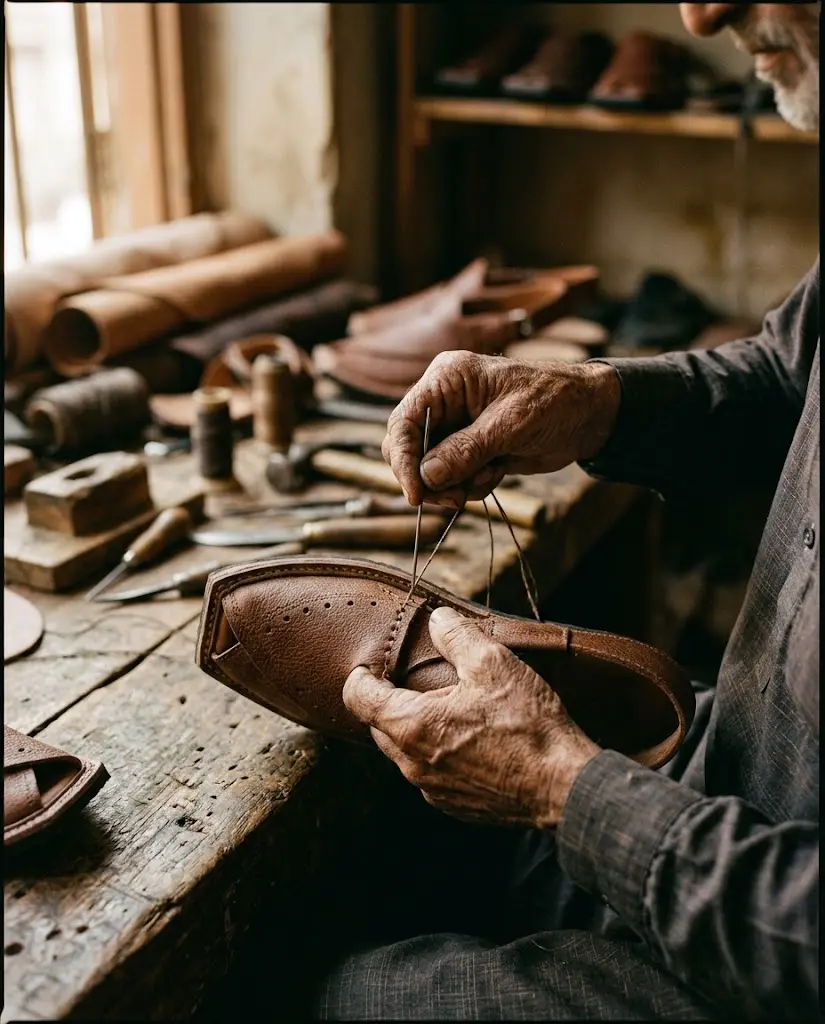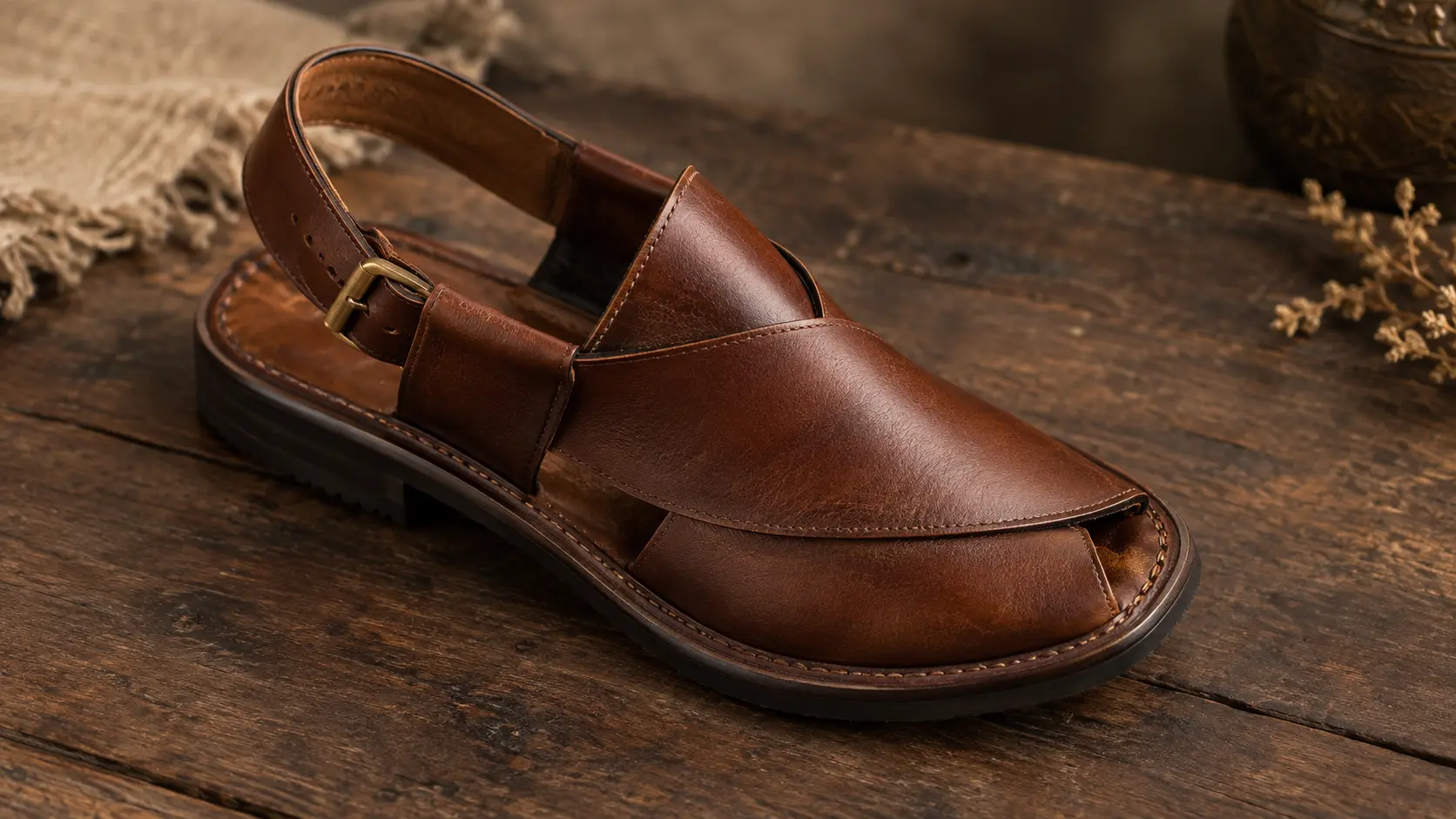
A Peshawari chappal is judged the moment someone glances down — and again, every single day you wear it. It's a simple design: one piece of leather for the upper, a stitched or nailed sole, and almost no hardware to hide behind. That simplicity is exactly why quality shows up so clearly. There's nowhere for a weak stitch or a stiff sole to hide.
If you've never bought a genuine pair before, it's easy to focus on the wrong things — the colour, the toe shape, the price. Those matter, but three things decide whether a chappal is still comfortable a year from now: the leather, the sole, and the fit. Here's how to judge each one before you buy.
Start With the Leather
Genuine leather and synthetic leather can look almost identical in a product photo, so this is the part worth checking closely.
- Feel the surface. Genuine leather has a slightly irregular grain and gives a little under light pressure. Synthetic material tends to feel uniformly smooth and stays rigid.
- Check the edges. Cut leather edges look fibrous and slightly rough up close. Synthetic edges are usually perfectly smooth, almost plastic-like.
- Smell it. This sounds unusual, but genuine leather has a distinct, earthy smell. Synthetic material often has a faint chemical smell instead.
Good leather isn't just about how it looks on day one — it's about how it ages. Genuine leather darkens slightly and softens with wear, moulding to your foot over the first few weeks. Synthetic material doesn't do this; it stays exactly as stiff as the day you bought it, and it cracks instead of creasing.
Test the Sole for Flexibility
Hold the chappal at both ends and bend it gently, the way your foot would bend it mid-step. A well-made sole flexes at the ball of the foot without much resistance and returns to its shape without cracking or leaving a stiff white crease line. If the sole feels like a rigid board, it will fight your natural stride, and that's usually where discomfort starts — typically under the ball of the foot or across the arch.
Rubber and layered leather soles behave differently underfoot. A rubber sole grips better on smooth or wet surfaces and lasts longer under heavy daily use. A stitched or nailed leather sole is lighter and breathes better, but wears down faster if you're on your feet all day. If you're buying for everyday use rather than occasional wear, the sole material is worth asking about specifically.
A chappal that fits well on the shop floor and one that fits well after eight hours of wear are not always the same pair.
Get the Fit Right — Not Just the Size
Peshawari chappals run differently from closed shoes, mainly because there's no lacing or strap system to adjust for a snug fit. A few practical checks help:
- Your heel should sit fully on the sole, not hang slightly off the back edge.
- Your toes shouldn't overhang the front of the sole, even by a small margin.
- The strap across the top of the foot should feel secure but not tight enough to leave a mark within a few minutes.
- Try both left and right — feet are rarely perfectly symmetrical, and a good pair should feel even on both sides.
If you're ordering online without trying the pair on first, measure your foot length in centimetres and check it against the seller's specific size chart rather than assuming your regular shoe size will translate directly.
What to Expect in the First Week
Genuine leather needs a short break-in period, and that's normal — it isn't a sign of a bad fit. Expect the strap to feel slightly firm for the first few wears as the leather softens and starts taking the shape of your foot. Wearing them around the house for short stretches before a full day out helps this process along.
What isn't normal is persistent pain, a strap that digs in without loosening at all after a week, or a sole that stays stiff no matter how much you flex it. If any of that continues past the first week or two, it usually points to a sizing issue rather than something that will simply wear in over time.
Once your pair is broken in, a small amount of ongoing care keeps the leather in that condition — we've covered a simple cleaning and conditioning routine in a separate guide on caring for genuine leather chappals, worth a read once you've made your choice.
Quick Checklist Before You Buy
- Leather feel: slightly irregular grain, gives under light pressure, fibrous cut edges.
- Sole flex: bends easily at the ball of the foot, no stiff crease or cracking.
- Fit: heel fully supported, toes not overhanging, strap secure without pinching.
- Stitching: even, tight stitches with no loose or fraying threads along the sole edge.
- Sizing: measured against a specific size chart, not guessed from regular shoe size.
The Short Version
A well-made Peshawari chappal should feel secure but not stiff from the first wear, and only get more comfortable from there. Genuine leather, a sole that flexes naturally with your step, and a fit that supports your heel and toes properly are the three things worth checking before anything else. Get those right, and the rest — the colour, the finish, the occasion you wear them for — is simply a matter of preference.